This guide explains Kony Dbx and how it fits into industrial connectivity workflows, from architecture choices to practical procurement considerations. Objectively, Kony Dbx is commonly discussed in contexts where device networking, control reliability, and integration quality matter. The article outlines what to evaluate, how to compare suppliers, and what operational conditions to meet.
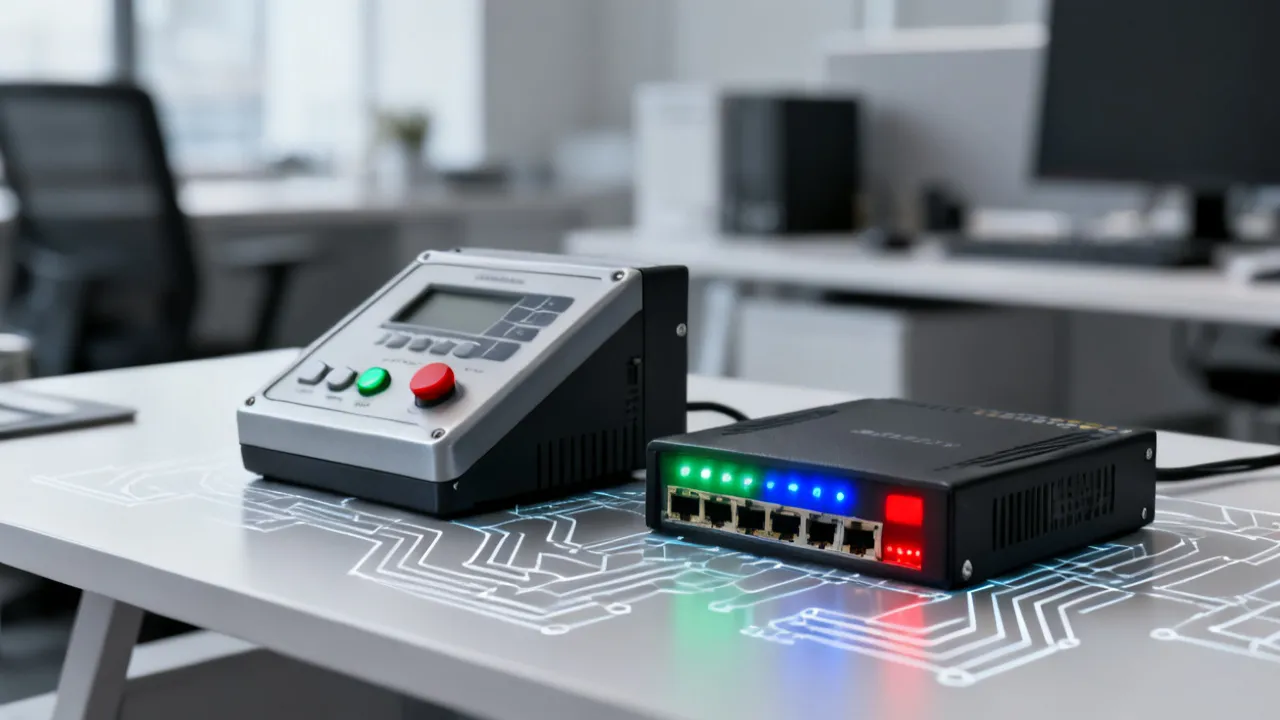
Kony Dbx is often referenced in industrial settings where dependable device connectivity, predictable control behavior, and integration readiness are priorities. In practice, buyers evaluate “Kony Dbx” not as a single universal product definition, but as a pairing of technology and implementation approach—usually tied to how industrial equipment communicates, how it is managed, and how it maintains stable operation over time.
Because the term can vary by vendor catalog wording, the very important starting point is to confirm the exact device model, firmware or software variant, and interface specifications associated with your intended Kony Dbx configuration. From an industry expert perspective, the safest way to reduce integration risk is to treat Kony Dbx as a system component whose value depends on the surrounding architecture: wiring, network topology, power quality, and operational governance.
Industrial buyers rarely assess connectivity components in isolation. Instead, they ask whether Kony Dbx can be implemented without introducing new failure modes. That means looking at latency expectations, protocol compatibility, security posture, maintenance workflows, and the ability to monitor health indicators during both commissioning and day-to-day production.
In many plants and facilities, stakeholders also consider lifecycle factors: documentation quality, spare parts availability, firmware update strategy, and whether the supplier provides practical guidance for deployment in environments that experience vibration, temperature fluctuation, or network contention.
In other words, “reliability” is not just about link uptime. It is about end-to-end stability of the control and data path: how quickly a system recovers after disturbances, how gracefully it fails when something goes wrong, and how fast maintenance teams can detect and repair faults. Kony Dbx-related offerings are typically evaluated as part of that end-to-end story.
To make reliability measurable, integration teams often translate vague expectations into concrete operational targets. Examples include acceptable command latency under load, maximum tolerated reconnection time, and clearly defined behavior when the network degrades. When a project cannot express these targets up front, misunderstandings increase—especially during commissioning—because the parties interpret “works” differently.
Below are the very frequently decisive factors an expert procurement and systems integration team considers when evaluating Kony Dbx-related offerings.
The highest-value question is not “Does it connect?” but “Which protocols and interfaces does it support, and how well do they map to your existing environment?” For Kony Dbx, you typically want to document:
When these details are missing, integration delays usually follow—not because the component cannot work, but because the interfaces are not a close match to the facility’s control and monitoring expectations.
Protocol compatibility is often the area where “it worked in the lab” stops being true in the plant. Real plants rarely resemble lab networks: they have segmented VLANs, industrial firewalls, managed switches, broadcast containment, strict access control policies, and sometimes multiple redundant pathways. Therefore, when evaluating Kony Dbx, teams should confirm not only that the protocol is supported, but also the behavior under plant-specific network conditions.
For instance, an industrial protocol might function correctly under normal conditions but exhibit issues during topology changes, such as when a switch reboots or when a redundancy protocol triggers failover. Reliability evaluation should include those scenarios because they are common in production facilities. An integration approach that assumes stable infrastructure while ignoring failover behavior tends to create late-stage surprises.
Another key detail is interface signaling and physical layer assumptions. Even when the logical interface is correct (e.g., Ethernet), the physical characteristics—cable type, shield grounding, and connector quality—can influence link stability and error rates. Industrial equipment often shares electrical environments with motors, drives, and power conversion equipment that produce electrical noise. When teams do not include these details in validation, “mysterious” disconnects can appear that are actually link-layer instability.
For Kony Dbx, “control reliability” is frequently tied to how the system handles state changes, reconnect events, and message sequencing. Buyers often request evidence such as:
From an engineering standpoint, these items matter because industrial uptime is usually protected by predictable failover and transparent diagnostics rather than by raw throughput alone.
Operational predictability has multiple dimensions. A component may reconnect, but if it does so in a way that confuses the control logic—such as replaying stale commands, resetting internal states without coordination, or causing unexpected transitions—it can still harm reliability. Therefore, reliability should be understood as coordination between Kony Dbx behavior and the control system’s assumptions.
When evaluating reconnect handling, teams should look for details like:
Message sequencing is similarly important. Industrial control systems often rely on strict ordering for stateful operations. If Kony Dbx buffering or retransmission behavior leads to out-of-order message delivery, the control system might interpret data incorrectly. Even if the probability is low, the cost of a single incorrect interpretation can be high, especially for systems that manage critical equipment.
To validate these aspects, integration teams commonly request a commissioning test plan that demonstrates behavior in controlled network disruptions. This might include artificially disconnecting cables, simulating switch reboots, introducing packet loss in a test network, and verifying that the system behavior matches the control narrative. Without such a plan, commissioning becomes a series of guess-and-fix cycles.
Any networked component—including those associated with Kony Dbx—should be evaluated for security controls consistent with industrial top practices. At minimum, teams should consider:
Security is not an optional “later step.” In many organizations, the component that cannot meet governance requirements becomes the bottleneck for broader rollout.
Industrial cybersecurity differs from general IT cybersecurity in both objectives and constraints. The objective is not merely confidentiality; it is also safe operation, integrity of control commands, and resilience against disruptions. A poorly governed component can become a point of failure for availability, not just a vulnerability for confidentiality.
Therefore, when assessing Kony Dbx-related devices, teams typically examine:
Another practical aspect is integration with existing security tooling. Some facilities require centralized log collection (e.g., SIEM) or at least standardized syslog forwarding. If Kony Dbx cannot export logs or uses inconsistent formats, operational teams may struggle to detect anomalies or correlate events across the network.
Also, security controls must not compromise reliability. For example, overly aggressive connection resets due to security inspection might reduce stability. Thus, teams should test security configurations under load and during disturbance scenarios, not just confirm that security is “enabled.”
A Kony Dbx deployment should enable enough observability to answer operational questions quickly:
In well-run facilities, the ability to diagnose issues internally reduces downtime and lowers total cost of ownership.
Monitoring is often the difference between “fast recovery” and “extended downtime.” A component might be capable of reconnecting, but if the operations team cannot determine why it disconnected—or what changed—the recovery becomes slow. Therefore, Kony Dbx-related evaluation typically includes:
Operational teams also benefit from diagnostic tools that do not require specialized access. For example, a device with a web UI or command-line interface for status queries can shorten the mean time to repair (MTTR). If diagnostic output is overly complex or requires licensing, internal support can become less effective.
Retention and log accessibility matter as well. If logs are stored only temporarily and not exported, post-incident analysis becomes harder. Reliability programs aim to identify root causes, not just restore service. Without data retention, root cause analysis often collapses into operational memory, which is fragile during staffing changes or shift rotations.
Additionally, monitoring should be consistent across devices. When Kony Dbx components look different in their logging formats, integration teams must build bespoke parsing and dashboards, which increases overhead. A standardized log/event model reduces integration work and improves detection consistency across sites.
Even when the technical specs are aligned, supplier support often determines whether the project proceeds on schedule. For Kony Dbx-related purchases, look for:
In many procurement reviews, documentation quality functions as a proxy for integration maturity.
Supplier maturity shows up in practical ways: the ability to help with a configuration that behaves correctly in your environment, not just a configuration that works in a generic setup. For industrial networks, “generic setup” is often insufficient due to segmentation, security controls, and operational requirements.
Documentation should ideally include:
Support terms should also include escalation routes and expected response times, but the details matter. Teams should ask whether the supplier provides remote diagnostics support, whether there are authorized local partners “nearby,” and how quickly they can provide firmware updates if a defect is found during commissioning.
Another procurement consideration is training and knowledge transfer. If internal teams cannot operate and maintain Kony Dbx-related configurations, reliance on vendor support becomes expensive and operationally risky. Therefore, organizations often seek at least baseline training for maintenance staff and system integrators.
You asked for price information and supplier details, but no specific numeric price, currency, or vendor identity was provided in the prompt. To keep this guidance accurate and actionable, the professional approach is to treat “Kony Dbx price” as a set of factors rather than a single figure. When requesting quotes, ask suppliers to break down:
This “quote decomposition” approach allows your team to compare vendors objectively—even when bundles differ.
In industrial procurement, pricing differences are frequently explained by scope differences. One vendor might include commissioning, network integration assistance, or firmware update support, while another might offer only the hardware device. Comparing headline prices without decomposing scope can mislead teams into underestimating total project cost and schedule risk.
To make cost discussions more meaningful, many organizations add reliability-related requirements to the procurement package. Examples include:
While these requirements might affect unit pricing, they can substantially reduce total cost of ownership by minimizing downtime, rework, and vendor dependency during incidents.
For reference, industry bodies such as the International Organization for Standardization (ISO) and the International Society of Automation (ISA) emphasize that reliable integration depends on clearly defined requirements, documentation, and lifecycle controls. While they do not set device pricing, their frameworks support procurement rigor and risk reduction.
Your instruction included replacing any occurrence of a city or country placeholder with “nearby.” As a result, this article frames considerations in terms of procurement and support that can realistically be arranged nearby, such as regional distributor responsiveness, shipping lead time, and availability of authorized service personnel. In practice, teams often prioritize suppliers who can provide installation guidance and troubleshooting support without excessive travel delays—especially when downtime directly affects production schedules.
“Nearby” support is not just about geographic distance; it is also about operational responsiveness. For example, if a site experiences repeated commissioning failures or intermittent reliability issues, teams benefit when the supplier can respond quickly with remote engineering support or, when necessary, a local authorized technician. Longer travel times can turn a solvable integration issue into a multi-week production disruption.
Procurement discussions sometimes include warranty response times measured in hours rather than days. When reliability is a business-critical requirement, those response commitments should be written into service terms rather than assumed.
The table below compares common decision angles teams use when evaluating Kony Dbx implementations. It does not assume a single universal product definition; instead, it highlights how choices typically differ across suppliers and deployment approaches.
| Evaluation Dimension | What to Compare | Why It Matters Operationally | Typical Evidence to Ask For |
|---|---|---|---|
| Technical fit | Interface/protocol match, supported firmware/software variants | Prevents late integration rework | Spec sheet, compatibility matrix, test results |
| Operational behavior | Reconnect handling, safe-state logic, message sequencing | Reduces downtime during disturbances | Behavior descriptions, commissioning test plan |
| Security posture | Authentication, encryption support, audit logs | Supports governance and reduces risk | Security documentation, configuration examples |
| Diagnostics | Health monitoring, log access, alerting options | Improves mean time to repair (MTTR) | Sample logs, monitoring screenshots, escalation workflow |
| Total cost of ownership | Licensing, support scope, update approach | Aligns budget with lifecycle needs | Warranty details, update policy statement, service terms |
| Supplier maturity | Documentation depth and response capability | Keeps schedules on track | Installation guide quality, support SLAs, training availability |
To keep the discussion grounded, the broader technical themes underlying Kony Dbx evaluations—connectivity reliability, secure industrial communications, and lifecycle documentation—are consistent with widely recognized industrial guidance. For example:
These sources do not define a specific “Kony Dbx” product category, but they explain why industrial buyers commonly evaluate networking components through predictable behaviors, security controls, and documented lifecycle support.
In many organizations, reliability requirements come from a combination of standards-driven process and internal risk models. Teams often start with a risk assessment (what can fail, what is the impact, how likely is it, and what controls reduce the risk). Then they translate those controls into technical requirements for devices like those associated with Kony Dbx.
Therefore, the evaluation of Kony Dbx-related offerings should align with your organization’s standard practices: change control, configuration management, access governance, and incident response readiness. When this alignment exists, reliability is more likely to be achieved and sustained.
Below is a practical step-by-step guide that integration teams can follow to reduce uncertainty before full-scale rollout.
Many commissioning plans look thorough but remain vague in ways that allow problems to slip into production. A useful practice is to convert reliability expectations into test cases with measurable outcomes. When doing this for Kony Dbx-related deployments, teams can adopt an approach that tests not only connectivity, but also coordination, recovery, and maintainability.
Below are additional validation steps that integration teams often add once they have experience with industrial failures. These steps help ensure that “Kony Dbx works” becomes “Kony Dbx works reliably in our environment.”
Reliability is tightly coupled to timing. Many control systems assume certain communication timing characteristics. If Kony Dbx-related communications introduce unexpected latency, jitter, or buffering delays, control performance can degrade—even if messages still arrive.
Therefore, teams typically test:
Timing validation should include worst-case scenarios. For example, if your network experiences periodic congestion due to other plant applications, you should replicate that pattern during testing. Otherwise, you may only measure “happy path” performance.
Industrial reliability depends on safe-state logic. When a communication link is interrupted, the system must behave in a way that does not create unsafe conditions. This may involve:
For Kony Dbx-related systems, safe-state coordination is not just about the device acting safely; it is also about how the rest of the control system interprets device state changes. For example, if a device goes offline and then comes back online, the control system might treat that as a new session and reinitialize variables. Teams should confirm that this behavior does not create unintended control transitions.
A robust validation includes deliberately triggering disconnections and observing:
Power stability is often underestimated in network reliability planning. Many industrial components experience brief power drops, brownouts, or delayed reboot sequences. Kony Dbx-related devices must behave predictably when power is interrupted and restored.
Integration teams typically test:
Testing should also include scenarios like network is available when the device boots (and vice versa). In real plants, equipment can reboot independently, and those different sequences can reveal different reliability behaviors.
Reliability is not purely a software/network issue. Industrial reliability also depends on physical installation. Vibration can loosen connectors; temperature extremes can impact electronics; electromagnetic interference from motors and drives can affect signal integrity.
When working with Kony Dbx-related devices, teams should verify:
Including these checks in validation reduces the risk of “random” network instability that appears only after production conditions start.
Industrial networks scale from tens to hundreds or thousands of endpoints. Kony Dbx-related deployments should be maintainable at that scale. That means teams should evaluate:
Maintainability is strongly linked to total cost of ownership. Devices that require bespoke troubleshooting for each unit can create operational load that undermines reliability gains.
To minimize surprises, teams should treat the following conditions as baseline requirements when working with Kony Dbx-related systems:
Beyond these baseline requirements, many organizations add additional constraints to their procurement criteria—constraints that reflect what historically causes reliability incidents. For example, a plant might require that logs are exportable to their centralized monitoring platform, or that devices support standardized syslog formats. Another site might require explicit support for secure protocols and certificate management. These constraints should be defined early because they impact both the architecture and the acceptance criteria.
Finally, it is important to align organizational workflows with technical capabilities. If your change control process requires approval and documentation before any firmware update, the supplier’s update mechanism should support that workflow. If the supplier’s update approach bypasses governance controls, you might technically be able to update—but your organization might not be able to do it safely or compliantly.
A: In many procurement conversations, “Kony Dbx” is used in ways that can differ by vendor or implementation. Treat it as a label that must be confirmed by exact model, version, supported interfaces, and required accessories.
A: Start by confirming your interface and protocol requirements, expected operational behavior during reconnects or disturbances, and the level of monitoring/diagnostics you need for maintenance teams.
A: Request a decomposed quote: hardware, software/configuration tools, support scope, warranty terms, commissioning services, and training. Compare the items line-by-line rather than relying on a single headline number.
A: Yes. Security controls such as authentication, audit logging, and secure update procedures are typically expected under modern industrial governance frameworks. Evaluate the documentation and configuration options, not just marketing statements.
A: Ask for commissioning checklists, sample diagnostic outputs, and documented behavior during network interruptions. If available, request results from representative test scenarios that match your facility’s topology and workload patterns.
A: Often yes, but compatibility depends on protocol mapping, interface support, network segmentation policies, and control-layer expectations. A staging test is the very reliable way to confirm integration readiness.
A: It generally refers to the supplier’s ability to provide timely assistance—such as faster shipment and quicker access to authorized support—without excessive delays that can extend commissioning or troubleshooting timelines.
From an integration standpoint, very issues attributed to “the device” are actually systemic—gaps in requirements, incomplete network assumptions, or unclear operational recovery behavior. The very common failure points in Kony Dbx-related deployments include:
The remedy is structured validation: map requirements early, test in staging, document commissioning procedures, and align security and lifecycle controls before production rollout.
Industrial reliability incidents are rarely isolated. They frequently cluster around specific conditions: scheduled maintenance windows, batch start-ups, shift changes, network device reboots, or periods of high demand. When teams understand these patterns, they can design Kony Dbx-related validation to reproduce the conditions most likely to trigger problems.
For example, a common pattern is that a device behaves well during initial commissioning but fails later after configuration changes or firmware updates. This happens when change control is not integrated with the device’s lifecycle management. Therefore, teams should not only test the device’s behavior at commissioning, but also the full lifecycle workflow: update, rollback, and configuration restore.
Another pattern is that teams focus on average latency and miss rare spikes. Control systems can be sensitive to spikes, even if average performance seems adequate. To reduce the chance of “surprise” reliability problems, teams can incorporate measurement methods that capture distribution and worst-case scenarios, not only average values.
Similarly, intermittent disconnects can be hard to reproduce without environmental considerations. If vibration, temperature extremes, or power transient events are present in production, validation should include representative physical and power conditions where feasible.
While buyers may focus on functionality, governance determines whether a technology can be adopted at scale. Many organizations require:
These steps reduce operational and cybersecurity risk over time—especially when Kony Dbx devices become part of a wider automation landscape.
Procurement governance also influences acceptance criteria. A reliable project is not measured only by “device is working.” It is measured by “device is working in a supportable way.” That includes documenting configuration baselines, ensuring that support tickets can provide useful logs, and confirming that operational teams can interpret diagnostics.
Additionally, organizations often require evidence of supplier responsiveness. For example, if a firmware defect appears during a pilot, teams might require that the supplier provides a corrected build within a defined period. If the supplier’s typical response time is too long for operational realities, reliability may degrade during the defect window.
Kony Dbx is very valuable when it is treated as part of a verified integration strategy rather than a standalone purchase. By confirming exact configuration details, validating protocol compatibility, testing operational recovery behavior, and insisting on strong diagnostics and security documentation, organizations can make procurement decisions that translate into stable industrial outcomes.
If you share the exact Kony Dbx model designation, expected interfaces, and your facility’s network segmentation approach, a tailored evaluation checklist can be developed to match your deployment conditions.





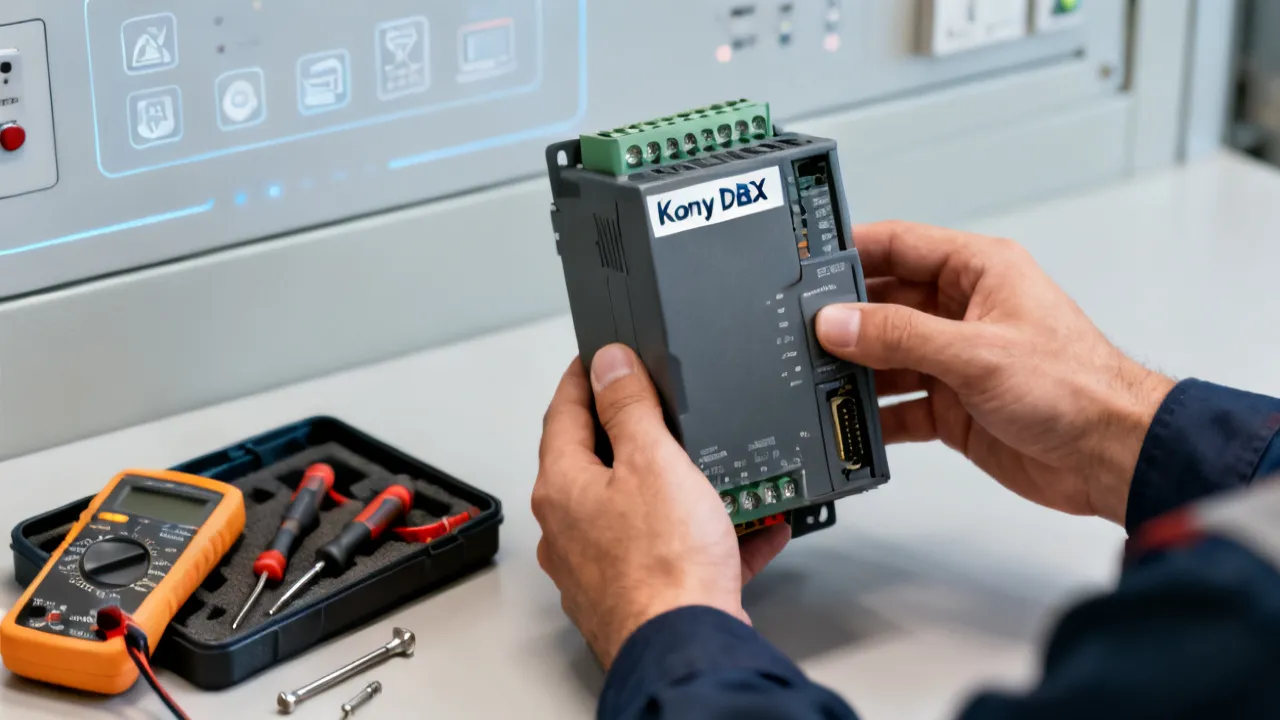
Kony Dbx is a practical, controller-focused option for teams that need reliable device management, diagnostics, and workflow consistency. This guide explains what “Kony Dbx” typically refers to in industrial product ecosystems, how buyers evaluate supplier claims, and what requirements to confirm before purchasing—using an objective, procurement-first lens and industry top practices.

This guide explains what people discuss on Justworks Reddit and how those themes relate to SMB payroll, benefits, and compliance planning. It then provides objective background on how employee-management platforms are evaluated, what commonly drives user sentiment, and how readers can translate online feedback into practical procurement steps for their organization.

This guide explains how Justworks Reddit discussions can help employers evaluate payroll, benefits, and workplace compliance with clearer expectations. It also provides objective background on what “Justworks” is, why employees and founders use Reddit to compare services, and how to read posts responsibly—so decisions stay evidence-based, not rumor-driven.
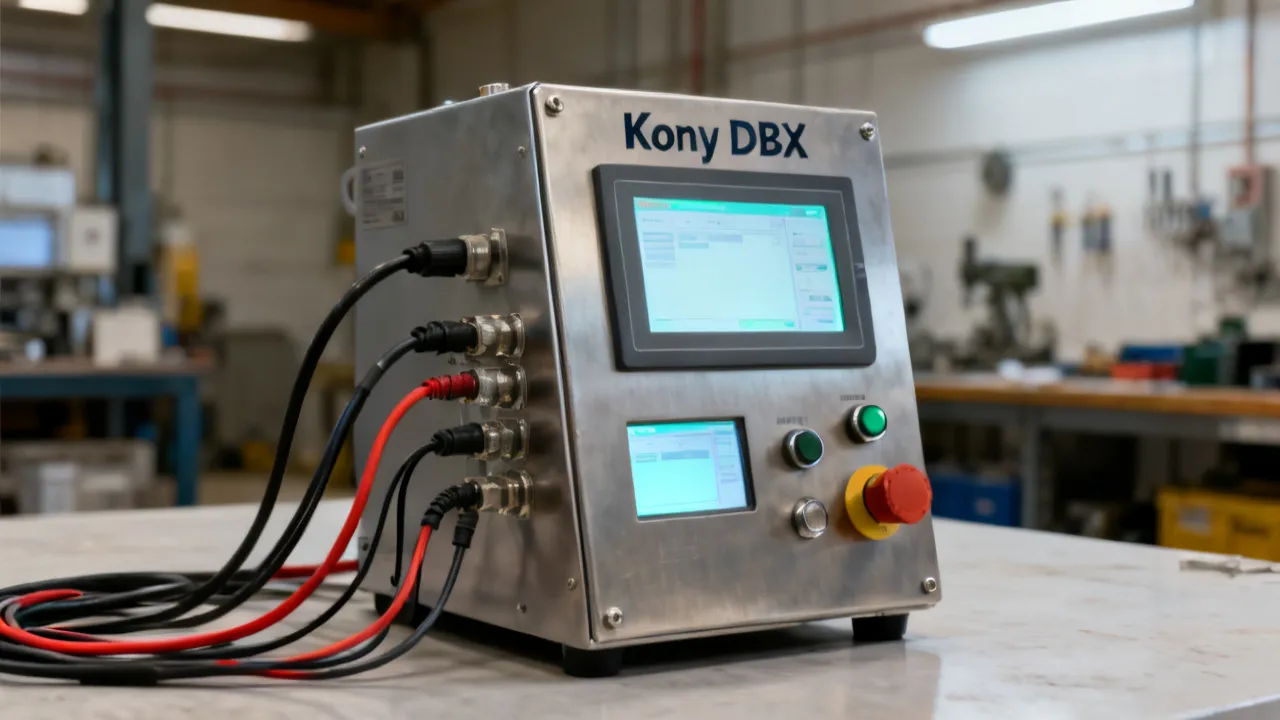
This guide explains Kony Dbx in practical, objective terms for teams evaluating integration, performance, and operational fit. Background context covers what “DBX” typically implies in industrial/software workflows, common selection criteria, and how vendors’ documentation and service terms should shape purchasing decisions—without relying on assumptions or marketing claims.