This guide explains what people discuss on Justworks Reddit and how those themes relate to SMB payroll, benefits, and compliance planning. It then provides objective background on how employee-management platforms are evaluated, what commonly drives user sentiment, and how readers can translate online feedback into practical procurement steps for their organization.

If you’re evaluating an employee-management platform, Justworks Reddit is often where you’ll find candid, experience-based perspectives on onboarding friction, payroll timing, benefits setup, support responsiveness, and day-to-day usability. People post about what surprised them, what felt smooth, what they wish they knew earlier, and what they had to do internally to make the workflow succeed. For SMBs, those narrative details can be useful because payroll and benefits administration is rarely just “software”—it’s software plus data plus deadlines plus responsible people.
That said, Reddit threads are not formal product documentation, and individual experiences can vary significantly by company size, payroll complexity, state footprint, implementation choices, and even how organized the team was before switching platforms. A candid thread might reflect a real gap, but it could also reflect a particular user role, a one-time edge case, a misinterpreted process, or delays caused by employee-submitted forms.
The most practical way to use Justworks Reddit is to treat it like qualitative research. Instead of treating it as a “review score,” treat it as a stream of signals. Identify recurring themes, compare them with official materials from the provider, and then test the process against your own requirements for payroll, tax filings, and employee benefits administration.
From an industry-expert perspective, the value of Reddit discussions is less about “rating the product” and more about revealing where teams usually get stuck. For payroll planning and benefits operations, “getting stuck” is commonly tied to moments where time is limited and the consequences of errors are high. For example: account setup, adding new hires, correcting demographic data, handling time-sensitive payroll changes, and coordinating benefits eligibility events. When those themes appear repeatedly across multiple posts, they can inform a practical checklist for internal readiness and vendor due diligence.
At the same time, it’s important to understand what Reddit does not capture well. Reddit doesn’t reliably show you the proportion of customers who never have issues. It also rarely provides full context: which package is used, whether the company has HR staff or outsourced operations, whether the business runs multiple pay schedules, and how mature the internal process is for submitting payroll-critical data. That missing context can lead to over-interpretation if you treat a thread like a statistically meaningful dataset.
In other words, Justworks Reddit is excellent for spotting potential failure points, but you still need to validate them through structured questions, workflow demonstrations, and—if available—a pilot rollout.
For small and mid-sized businesses, payroll and benefits administration can quickly become operationally heavy. Even when the company’s payroll is “straightforward,” employers are still responsible for paying wages on time, handling tax reporting, managing deductions, and ensuring that employee benefits are administered correctly. When the business grows, the administrative workload doesn’t scale linearly—it can scale in steps. For instance, moving from 10 employees to 30 employees may introduce multiple benefit tiers, multiple enrollments, and more complex scheduling of qualifying events.
Integrated platforms aim to consolidate tasks that otherwise require coordination across different systems or vendors. Instead of managing payroll in one place and benefits administration in another, employers can centralize data capture and reduce handoffs. In theory, that reduces operational friction such as duplicate data entry, misalignment of effective dates, inconsistent employee identifiers, and confusing documentation flows.
However, “integrated” doesn’t automatically mean “effortless.” The real operational outcomes depend on factors such as data quality, change management, compliance scope, and the support model. This is exactly where community discussions become a proxy for operational reality: not whether the platform has features, but whether those features work reliably in day-to-day deadlines.
From a due diligence standpoint, you can think of integrated payroll and benefits tools as attempting to solve three categories of problems:
But integrated tools can still fail operationally if the inputs arrive late, if internal ownership is unclear, or if edge cases aren’t handled transparently. This is where Justworks Reddit often becomes a qualitative lens. Posts frequently mention what happens when “normal” operations meet atypical scenarios.
Reddit is built around personal narratives. That means a thread may describe a smooth experience for one team, while another may focus heavily on a specific issue encountered during an atypical scenario. A third might reflect confusion because an employee didn’t complete onboarding tasks promptly. Another might be about a temporary workflow gap during a transition period. As a result, you should read Justworks Reddit as a set of hypotheses, not conclusions.
A disciplined approach is to treat each post as a story that includes context. When you read multiple posts, you’re looking for repeated patterns that suggest systemic issues rather than one-off events. This approach works particularly well for SMB payroll planning, because payroll problems are often predictable categories of failure: missing data, missed deadlines, unclear responsibilities, and insufficient support response times.
A practical methodology:
When you see repeated references to the same operational pain points, treat that repetition as a justification for validation. The key is to validate the process around the pain point, not just the vendor’s marketing claim. You want to know: if this happens to us, what exactly will the workflow be, what is the timeline, what communications are sent, and what do we need to do?
For example, repeated comments about payroll changes near cutoffs may not simply mean “the platform is bad.” It might mean that users weren’t aware of cutoff policies, or that the process requires the employer to confirm effective dates or withholding settings in a specific way. Your due diligence should clarify the “how” and “when,” not just the existence of a feature.
Even without relying on a single Reddit narrative, you can structure your evaluation around core operational pillars that typically drive user satisfaction or frustration in payroll and benefits tooling. Most problems in payroll and benefits operations are not about basic capability; they’re about reliability under deadline pressure, clarity of responsibilities, data mapping accuracy, and the ability to recover quickly when something goes wrong.
Many payroll problems begin before the first payroll run. If employee data is incomplete or inconsistent—names, addresses, tax-relevant fields, or benefit eligibility dates—downstream payroll and reporting tasks become more manual. In an integrated workflow, small input issues can cascade. For example, an incorrect address might affect tax withholdings or compliance reporting; missing demographic data might cause benefits eligibility or enrollment errors; an incorrect start date might affect whether the employee qualifies for a prorated benefit period.
During onboarding, pay attention to whether the platform provides clear instructions, validates required fields, and supports timely submission of onboarding documents. The question isn’t only “can employees be added?” but “how reliably does the system detect missing or conflicting information, and what help is available when something is wrong?”
When you test onboarding, consider not only your “happy path” but also the variants you know will happen in real life:
These scenarios help you understand whether the platform reduces confusion or simply shifts the workload back to your internal team.
In real organizations, changes happen frequently: address updates, withholding adjustments, benefit elections, terminations with effective dates, and sometimes corrections to pay rate or pay type. A platform’s value is revealed when you need to process changes near deadlines. The very critical question to ask is not just “Does it support changes?” but “How reliably and transparently are these changes processed, confirmed, and reflected in the next pay cycle?”
Payroll change handling involves several sub-processes:
Community posts often mention frustration when changes aren’t reflected immediately, or when it’s unclear whether a change actually made it into a specific run. For SMB payroll planning, the operational goal is predictability. Your planning should identify what “predictability” means: how quickly employees see updates, how often payroll cycles require re-runs, and how exceptions are communicated.
Benefits workflows often include enrollment periods and life events. The administrative burden increases when eligibility rules vary by employment status, effective dates, or plan-specific requirements. When users discuss Justworks Reddit, benefits-related comments are commonly about clarity: whether employees understand steps, whether employers can confirm eligibility, and how quickly changes propagate from “requested” to “active.”
For objective evaluation, request a workflow walkthrough that shows end-to-end behavior. Don’t limit the demo to general “how to enroll.” Instead, ask to see:
Additionally, consider testing a scenario that often causes trouble in benefits: a life event occurs mid-cycle, and the employee requests changes after the initial onboarding or within a narrow eligibility window. The vendor should explain what happens in those circumstances, including how exceptions are handled and what timelines employees can expect.
Another area to evaluate is how the platform handles the administrative tasks around benefits. Integrated systems can help, but employers still often need to provide internal information like eligibility verification, employee documentation, and internal approvals. If responsibilities are unclear, confusion will reappear—regardless of how good the interface is.
Pricing for payroll and HR platforms can vary based on factors such as number of employees, service scope, and which benefits options are selected. It’s common to see community posts that mention pricing, but those numbers may reflect a specific plan configuration, an older pricing model, or a unique negotiation based on headcount and contract terms.
If you encounter “price information” cited in community posts, treat it as a starting point for inquiry, not a budgeting guarantee. For SMB procurement, the most important step is to get current, written pricing aligned to your scope.
In practical procurement terms, ask the vendor (or sales team) for:
Community threads may help you guess what pricing components might exist. But you still need contract-level clarity: what is included, what is optional, and how renewals and changes are handled.
This approach keeps your budgeting grounded in current contractual terms rather than anecdotal references found in Justworks Reddit threads.
When people say “supplier details” in the context of HR, payroll, or benefits, they usually mean more than a company name. For a platform provider, the relevant “supplier” question is: what parts of the service are handled directly by the platform vendor versus by partners?
Many HR and payroll ecosystems involve partners. Even if the platform provides a unified portal, the operational steps behind the scenes might rely on:
As you evaluate Justworks Reddit feedback, look for clues about where problems occurred. Sometimes the complaint isn’t about the platform interface—it’s about a specific stage in the workflow. If you can isolate which layer caused friction, you’ll know what to ask during vendor conversations and what internal changes you may need to make to reduce risk.
Examples of operational layers that can influence experience:
To make this concrete, ask the vendor how they handle an issue when something is delayed. Is the vendor the owner of the outcome, or does the vendor just route requests? That difference matters during payroll-critical windows and during benefits enrollment when employees expect timely resolution.
In due diligence, you can also ask: “If a partner is responsible for part of the work, how is accountability handled? Who communicates with the employer? How do escalations work?” The supplier ecosystem becomes a key part of your risk management plan.
Payroll and HR processes can be affected by local employment and tax realities. If your operations are concentrated in a particular region or state set, consider how employee onboarding timelines, document submission practices, and benefits enrollment communications align with local norms and requirements.
Even when a platform offers broad coverage, the operational reality can differ based on local compliance rules, state payroll tax considerations, and how effective dates are interpreted in different contexts. That doesn’t mean you should ignore Reddit—rather, you should interpret it as scenario-specific.
While online discussions may mention experiences tied to specific contexts, treat them as signals rather than universal predictions. For instance, a thread from a company with multi-state payroll complexity might not translate to your single-state scenario. Similarly, a thread from a high-growth startup dealing with rapid onboarding volume may not reflect what a stable SMB experiences.
In general, organizations that succeed with integrated platforms invest in consistent data collection and clear internal ownership of “who submits what by when.” That internal discipline often has a bigger impact on outcomes than whether the software includes a certain button or workflow screen.
Therefore, your location-specific evaluation should focus on the operational process you’ll follow for:
When you align internal workflow and location-specific realities early, you reduce the chance that Reddit-like issues emerge in your own rollout.
| Evaluation focus | What common Justworks Reddit themes may suggest | What you should verify with the supplier |
|---|---|---|
| Onboarding clarity | Users may discuss whether setup feels intuitive or requires extra back-and-forth. | Confirm onboarding steps, expected timelines, required data fields, and escalation paths if something is missing. |
| Payroll timing | Threads may mention deadline sensitivity and how quickly changes reflect on a pay run. | Ask for cutoff times, confirmation mechanisms, and examples of how corrections are processed. |
| Benefits enrollment | Posts may highlight employee confusion during enrollment or employer confusion about eligibility rules. | Request a benefits workflow walkthrough and test an eligibility-change scenario end-to-end. |
| Support responsiveness | Commentary may reflect what happens when issues appear close to payroll dates. | Clarify support hours, average response expectations, and what “urgent” means operationally. |
| Implementation effort | Experience may vary depending on how much HR or admin work the company can internalize. | Define roles: what your team must do versus what the supplier handles; document shared responsibilities. |
| Change auditability | Threads may complain about not knowing whether a change “took effect.” | Verify how the system records changes, shows status, and provides audit logs for review and compliance. |
| Data dependencies | Posts may mention rework due to missing employee info or inconsistent records. | Confirm what data is required at onboarding, how validation works, and how corrections are handled. |
Below is a practical method you can use to evaluate a payroll/benefits platform using Justworks Reddit as one input stream. The goal is to reduce the chance of discovering issues after you sign. This is achieved by converting “stories” into “questions,” then converting questions into evidence—through demonstrations, documentation review, and process walkthroughs.
Create a list of scenarios that commonly trigger HR administration work. Examples include new hires with complex start dates, address changes near payroll cutoffs, benefits eligibility changes, and terminations that impact final pay. Also include scenarios that you suspect might happen because of your business model.
To make the checklist robust, include:
Don’t focus on single anecdotes. Instead, tag posts by category (onboarding, payroll correction, benefits, support). Track how frequently each theme appears and whether the experience is consistent across different time periods.
Also record the “tone” and the “stage” of the workflow. For example, a post might complain about:
In your notes, distinguish between “interface complaints” and “outcome complaints.” Interface complaints might be solvable with training; outcome complaints might indicate workflow risks.
Turn each theme into a direct question. For example:
Then, for each question, define what evidence you need. For instance, you may want:
Ask for a guided walkthrough that uses your hypothetical (but realistic) cases. The top demos are not feature tours—they’re scenario tests.
When you request the demo, provide a short scenario brief to the vendor. For example:
Ask the vendor to show not just the “end state” but the entire workflow: what your team does, what the vendor does, what the employee sees, and what happens when exceptions occur.
Even the very polished platform cannot succeed without operational discipline. Establish who owns payroll changes, who submits employee data, and what triggers escalation (for example, changes inside a defined window before cutoff).
Create RACI-style clarity (even informally):
Also define escalation triggers:
This is where many SMB issues happen: not because the software can’t do the work, but because nobody knows who to call when things get close to deadlines.
Payroll and benefits data are sensitive. Confirm how the platform handles access controls, audit logs, and document retention. If your organization has internal compliance requirements, align them early.
In a robust evaluation, you should ask about:
Also consider operational audit readiness: if there’s ever a question about an employee’s eligibility or pay calculation, can you retrieve the relevant documentation quickly?
If the supplier offers a trial or phased onboarding, use it to measure outcomes you can observe: time-to-setup, time-to-process changes, and how quickly support resolves issues. Avoid measuring only “how it looked” and focus on throughput and reliability.
Define measurable metrics before the pilot. For example:
Even a short pilot can reveal whether the operational workflow is stable or whether your team will need extra internal resources to manage exceptions.
Common requirements determine whether a payroll/benefits platform will meet expectations. If any condition is missing, friction often appears, and those frictions can show up in community discussions—sometimes interpreted as “the platform is unreliable,” when the real cause is incomplete inputs, unclear responsibilities, or lack of operational readiness.
From a planning perspective, you should ensure both supplier-side and customer-side readiness.
It’s worth emphasizing: many payroll/benefits “failures” are actually coordination failures. The platform can be capable, but if the organization doesn’t have a consistent process to supply correct information on time, problems become inevitable.
Therefore, treat your internal process design as part of the implementation—not as an afterthought. When teams invest in internal readiness, many “Reddit-style” issues become far less likely to happen, regardless of vendor.
It’s useful for identifying recurring themes and potential pain points, but it isn’t a substitute for official documentation, contract terms, and a workflow demo tailored to your organization. Treat Justworks Reddit as qualitative input and validate key points with the supplier. When a theme appears repeatedly, use it to craft targeted questions and scenario tests.
Because companies vary in headcount, payroll complexity, multi-state considerations, benefits plan choices, and internal HR/admin readiness. In many cases, user experience is driven by process discipline and data accuracy as much as by the software. Timing also matters: a business can have a great experience after implementation maturity, while another experiences friction during transition months.
Ask scenario-based questions: payroll changes near cutoffs, corrections after submission, employee onboarding timelines, and benefits eligibility updates for life events. Request examples of how the platform records actions and how you confirm completion. If possible, ask the vendor to demonstrate both the standard workflow and exception handling (what happens when a required field is missing, or when a change is submitted late).
Use community posts as a starting point, then request current pricing for your expected headcount and service scope. Confirm whether fees change as you add employees and whether any implementation or support costs apply. Also confirm what is included versus optional (e.g., certain reporting, additional admin services, benefits-related tasks).
Clarify what the platform provider administers directly versus what is handled by partners (benefits administration, documentation services, or compliance processes). Knowing the responsibility split helps you diagnose issues quickly if they arise and reduces confusion about escalation ownership. Ask how partner delays are communicated and how accountability is handled.
Standardize data collection, define internal cutoff procedures, train at least one admin owner, and document escalation triggers. A disciplined rollout usually prevents many of the problems people discuss on Justworks Reddit. Consider running parallel processes for a short period (where permitted) or performing a structured checklist-based onboarding for new hires during the early months.
In procurement and HR operations, platforms are evaluated across categories: usability, workflow completeness, compliance fit, service model, and operational reliability. Community feedback can highlight usability and support concerns, but formal evaluation requires process alignment. The difference between a “vendor that looks good” and a “vendor that performs well” is often not the interface—it’s the reliability of outcomes under realistic conditions.
When organizations adopt payroll and benefits systems, they typically measure success through:
These measures help convert qualitative discussion—such as what you find in Justworks Reddit—into objective decision outcomes. Community posts can help you decide what to measure. Procurement and implementation processes help you determine what you’ve actually bought.
It can also help to categorize risks upfront:
Once risk categories are defined, Reddit themes can be mapped to risks. For example, “support doesn’t respond quickly close to payroll date” maps to operational risk and vendor risk. “Employees were confused during benefits enrollment” maps to employee experience risk, plus process risk if internal communications weren’t set.
That mapping ensures you don’t treat Reddit sentiment as a universal verdict. Instead, you treat it as a risk-identifier that informs your procurement questions and your internal implementation plan.
Justworks Reddit can be a valuable window into how real teams experience onboarding, payroll timing, benefits administration, and support. Yet the very dependable path is to treat those conversations as signals for due diligence: validate with the supplier, test real scenarios, and ensure internal readiness. By using Reddit themes as a checklist—not a verdict—you’ll make a clearer, more defensible platform decision for your organization.
Ultimately, the best outcome for SMB payroll planning is a system where deadlines are transparent, responsibilities are clear, data flows reliably, and exception handling works predictably. If you use community discussions to ask better questions—and then confirm those answers with evidence—you’ll reduce surprises and increase the odds that your payroll and benefits operations run smoothly after implementation.






This guide explains Kony Dbx and how it fits into industrial connectivity workflows, from architecture choices to practical procurement considerations. Objectively, Kony Dbx is commonly discussed in contexts where device networking, control reliability, and integration quality matter. The article outlines what to evaluate, how to compare suppliers, and what operational conditions to meet.

Kony Dbx is a practical, controller-focused option for teams that need reliable device management, diagnostics, and workflow consistency. This guide explains what “Kony Dbx” typically refers to in industrial product ecosystems, how buyers evaluate supplier claims, and what requirements to confirm before purchasing—using an objective, procurement-first lens and industry top practices.

This guide explains how Justworks Reddit discussions can help employers evaluate payroll, benefits, and workplace compliance with clearer expectations. It also provides objective background on what “Justworks” is, why employees and founders use Reddit to compare services, and how to read posts responsibly—so decisions stay evidence-based, not rumor-driven.
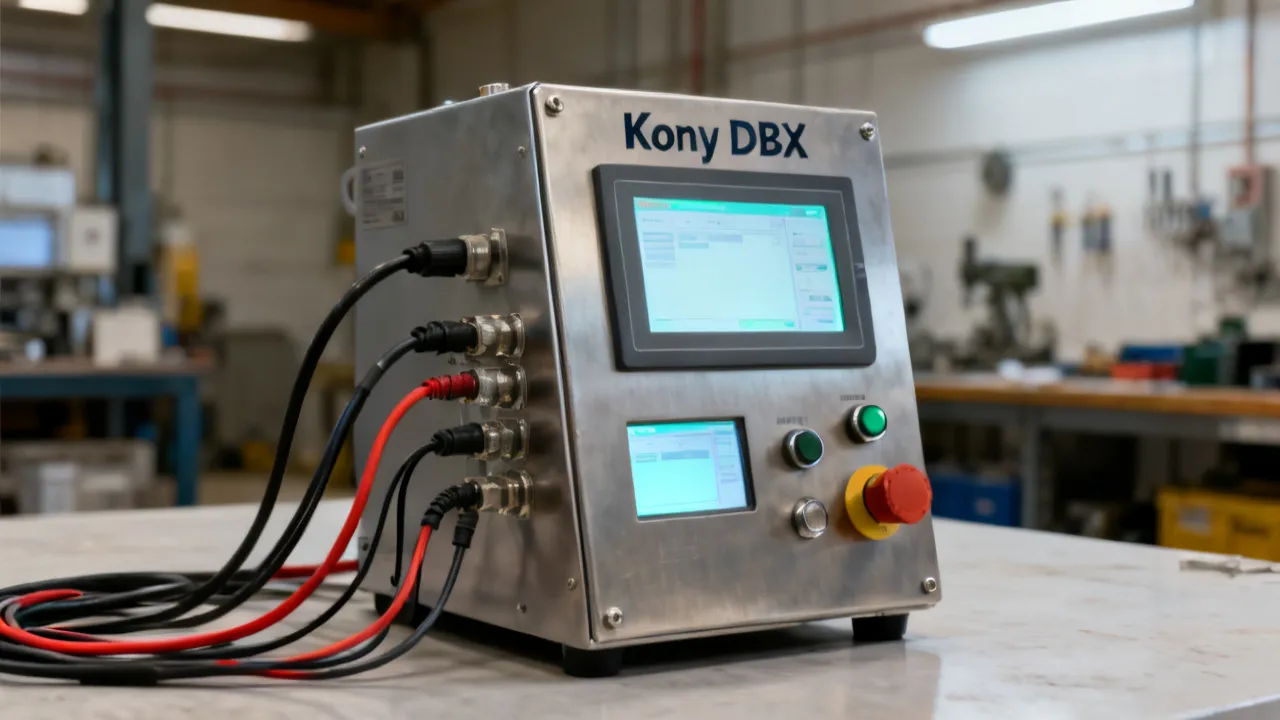
This guide explains Kony Dbx in practical, objective terms for teams evaluating integration, performance, and operational fit. Background context covers what “DBX” typically implies in industrial/software workflows, common selection criteria, and how vendors’ documentation and service terms should shape purchasing decisions—without relying on assumptions or marketing claims.